
“In every walk in nature, one receives far more than one seeks.” ~ John Muir
Do you find yourself invigorated after spending time outdoors? Do you feel better in body, mind, and spirit after even moderate exercise? Might you feel more comfortable talking with a therapist while walking together than while sitting in an office or meeting online?
If you answered “yes” to one or more of the questions above, walk-and-talk therapy might be right for you.
What is walk-and-talk therapy?
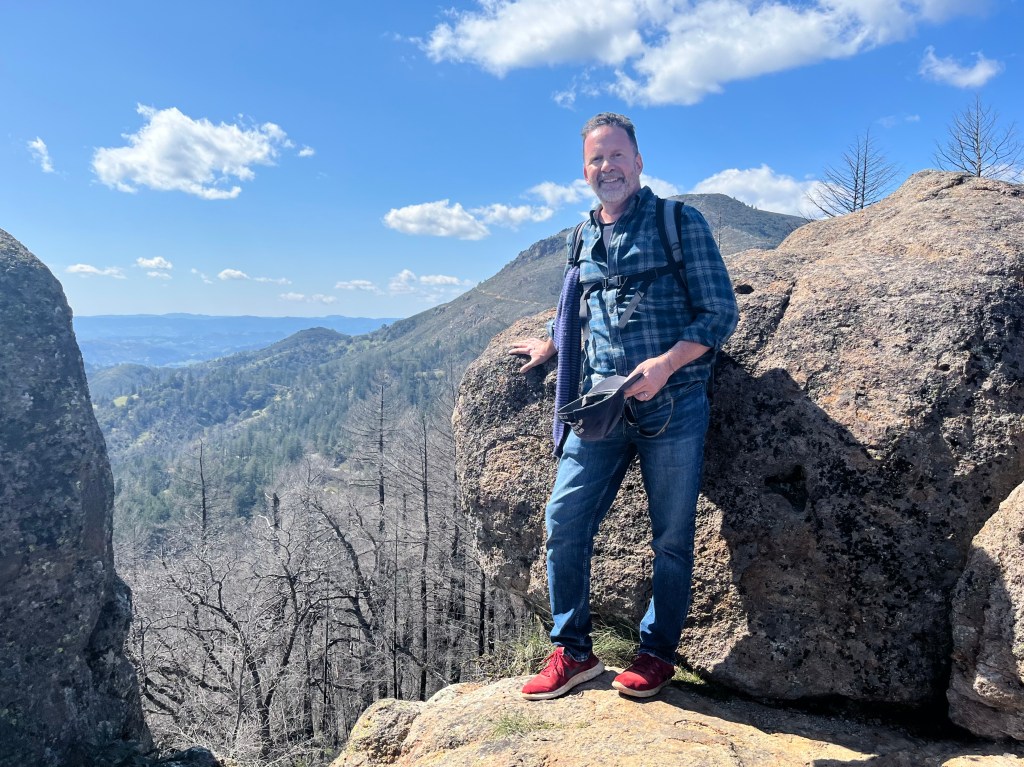
Walk-and-talk therapy is just what it sounds like: a form of psychotherapy that combines walking outdoors with healing conversations about your concerns. In each session, we will meet and start to walk and talk together, perhaps pausing to take in the natural setting or engage in silent reflection.
Some clients report feeling more comfortable sharing while walking side-by-side with their therapist rather than sitting face-to-face in an office or online. Others find value in physical movement, both for its positive effects on brain chemistry and for its capacity to help them get “unstuck”. Still others (like John Muir) are refreshed simply by spending time outdoors.
If you think any of these might be true for you, or if you just like the idea of combining nature, movement, and talk, please consider asking to try it out.
Considerations
Walk-and-talk therapy, while offering many benefits, is not for everyone. Some clients feel concern they may be recognized or even overheard during a walk, compromising confidentiality. It will be important for us to agree in advance how to handle such situations, which can usually be managed.
Walk-and-talk therapy also involves moderate exercise, which requires a certain degree of mobility and physical health. It will be important for us to discuss any mobility or health concerns you have, as well as accommodations that might mitigate these concerns, and to proceed at your preferred pace.
Finally, you and I may also determine that certain issues deserve to be discussed more privately than is possible in a public, outdoor setting.
How do I get started?
In an initial free consultation, you and I will discuss your goals and preferences, including your interest in trying walk-and-talk therapy. Next, we will meet in the office or online to share important background information and get to know each other. After that, we will meet regularly at an agreed-upon location to begin and end our walks. If you find that walk-and-talk therapy does not work for you, you may change your preference at any time.
Please contact me to discuss whether walk-and-talk therapy is right for you.
“I only went out for a walk, and finally concluded to stay out till sundown, for going out, I found, was really going in.” ~ John Muir
References
DeAngelis, T. (2013). A natural fit. Monitor on Psychology, 44(8). https://www.apa.org/monitor/2013/09/natural-fit.
Dockett, L. (2019). Walk and talk: Psychotherapy takes a stroll. Retrieved from https://www.psychotherapynetworker.org/magazine/article/2407/walk-and-talk.
Just, L. (2020). What is walk and talk therapy? Retrieved from https://welldoing.org/article/what-is-walk-and-talk-therapy.
Knose, A. (2022). Walk and talk therapy: Uses, benefits & how to start. Retrieved from https://www.choosingtherapy.com/walk-and-talk-therapy/.
Wright, S. (2008). Walk and talk therapy. Retrieved from https://www.webmd.com/balance/features/walk-and-talk-therapy.
 Jim Torrens